Environmental Considerations for Commercial Land Appraisers in Waterloo Region
Every commercial land appraisal in Waterloo Region sits at the intersection of geology, history, and regulation. Beneath the market rent schedules and discounted cash flows, environmental factors can swing value by seven figures, elongate timelines, spook lenders, or stop a project outright. An experienced appraiser does not treat these as a footnote. They build environmental risk into the valuation narrative from the first site scan to the final reconciliation.
Why environmental issues move the needle on value
Environmental risk works on value through four channels: direct cleanup cost, time delay, stigma, and land yield. Take a modest infill parcel in Kitchener that once hosted a dry cleaner. If a Phase II Environmental Site Assessment (ESA) confirms chlorinated solvents in soil and groundwater, remediation might cost in the mid six figures, but carrying costs during cleanup and permitting can match or exceed that amount. Even if remediation succeeds, residual stigma can linger in cap rates and lease-up risk, especially with risk‑averse tenants. For development land, constraints such as floodplains or regulated wetlands reduce buildable area, force costlier stormwater design, and shift density, which recasts the highest and best use.
Investors notice. Lenders notice faster. Local banks familiar with Waterloo Region may underwrite around specific hazards, but national lenders often widen spread or condition advances on a Record of Site Condition. The stronger the paper trail of due diligence, the more predictable the financing and the value outcome.
The Waterloo Region backdrop
The Region of Waterloo includes Kitchener, Waterloo, Cambridge, and the townships of North Dumfries, Wellesley, Wilmot, and Woolwich. This is an economy that pairs manufacturing and logistics with tech and institutional users. The built form ranges from 1960s industrial blocks along rail corridors to modern flex campuses north of the Conestoga Parkway, with farm operations and aggregates on the fringes.
A few local patterns matter for commercial land appraisers:
-
Rail spurs and former industrial corridors, particularly in south Kitchener and parts of Cambridge, raise the odds of historical contamination. Old boiler houses, machine shops, and plating operations leave signatures like petroleum hydrocarbons, metals, or chlorinated solvents.
-
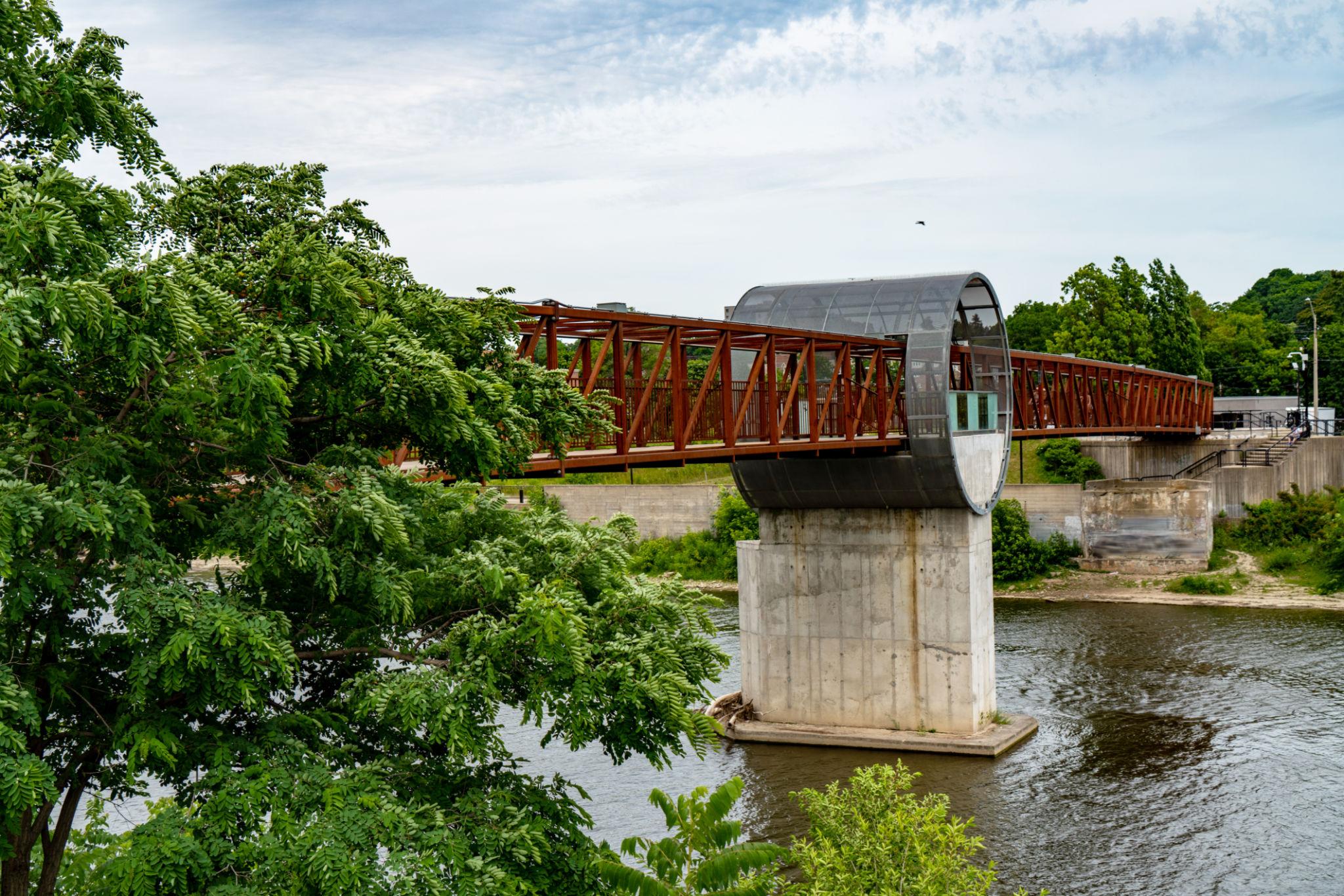
Portions of the Grand River floodplain, plus tributaries such as the Speed and Conestoga Rivers, are regulated by the Grand River Conservation Authority. Setbacks, hazard mapping, and flood depths translate to site plan constraints and cost.
-
Source water protection is a live issue. The Region relies on groundwater for much of its supply. Wellhead Protection Areas impose risk management measures that can restrict certain land uses or trigger additional approvals.
-
Surficial geology is mixed. Clay till can slow infiltration and complicate stormwater management. In areas with shallow bedrock, a solvent plume can migrate differently than in deep overburden. These mechanics shape both remediation strategy and development servicing.
Understanding these regional features allows commercial land appraisers in Waterloo Region to spot value inflection points early, not halfway through a deal when a Phase I ESA uncovers a surprise.
The regulatory frame in Ontario
Ontario’s environmental regime anchors appraisal risk assessments. Several instruments show up repeatedly in files across the region:
-
Environmental Site Assessments follow CSA standards. Phase I is a paper and visual review, Phase II is intrusive sampling. Many lenders in Waterloo Region require a current Phase I for loans secured by industrial or older commercial buildings, and will condition larger facilities on a Phase II if the Phase I flags concerns.
-
A Record of Site Condition, filed with the Ministry of the Environment, Conservation and Parks, can be required when changing land use to a more sensitive category. A common path is industrial or commercial to mixed use residential. RSCs demand a higher standard of investigation and, if needed, remediation to the appropriate generic standards or approved site-specific standards.
-
Conservation authorities, led locally by the GRCA, regulate development in floodplains, valleylands, and other hazards. Even small encroachments can trigger permits, hydraulic modeling, compensatory storage, and detailed grading. An appraiser must understand where the regulated lines fall and how much they bite into yield.
-
Source water protection policies under the Clean Water Act shape site permissions within Wellhead Protection Areas and Intake Protection Zones. If a site intersects a high-risk zone, certain activities like bulk fuel storage can be prohibited or tightly controlled.
-
Excess soil regulation under O. Reg. 406/19 now governs how excavated material is classified, tracked, and reused or disposed. This matters when redevelopment involves large earthworks. Clean soil reuse on site can shave costs, while off-site disposal of impacted soil can push pro formas out of balance.
These rules do not sit in a vacuum. Municipal zoning, site plan control, and building code requirements interact with them. In Cambridge, for example, a flood fringe policy can work with a zoning envelope to yield a narrower set of viable building footprints. That narrowed choice has a price.
Common environmental signatures by asset type
Different commercial uses draw different risk profiles. Experience helps triage where to dig deeper.
Retail strips with decades of tenant churn often hide dry-cleaning units or small service bays. Chlorinated solvent releases from historic dry cleaners are among the most stubborn contamination cases because they travel in groundwater and persist. A strip that seems benign can carry a legacy far beyond its walls.
Service stations and cardlocks are obvious, but former stations, especially those retired before underground storage tank rules tightened, can be elusive. Deeds and fire insurance maps help, but aerial photos and utility locates often complete the picture.
Old light industrial, common in Kitchener and Galt, can involve degreasers, plating baths, paints, and cutting oils. Expect metals like chromium, nickel, and lead, plus petroleum hydrocarbons. Machine shop floors might look clean after a modern renovation, yet sub-slab soils tell a different story.
Agricultural and rural commercial properties can accumulate pesticide residues, hydrocarbon staining around fuel tanks, and localized nutrient loading near manure storages. Not every rural site is clean just because it sits on acres.
Warehouses and logistics facilities, especially newer tilt-up buildings in north Waterloo and Breslau, usually present fewer contamination risks. The environmental questions there pivot to stormwater management, salt loading from large parking fields, and the site’s position relative to regulated areas.
Reading a site before the paperwork
A hands-on site walk matters, even for a desk-bound commercial property assessment in Waterloo Region. An appraiser should scan grading, floor drains, transformer pads, rail spurs, and odd landscaping mounds that might hide demolition debris. Photographs of patched asphalt, vent pipes, or old fill piles often matter as much as any municipal file.
Three data pulls routinely support the early read. Historical aerials and fire insurance plans set the industrial lineage. City directories track tenants over time, which is how long-forgotten dry cleaners surface. Municipal building files show permits for tanks, sumps, or demolitions, though records may be sparse in older districts.
Phase I and Phase II ESAs through a valuation lens
Phase I ESA findings typically fall into three buckets: no issues identified, recognized environmental conditions that warrant further work, or data gaps that make the assessor cautious. Many lenders accept low-risk Phase I findings and proceed. Where concerns appear, a Phase II may be required. Phase II sampling timelines in the region commonly run two to six weeks from mobilization, with lab turnaround shaping the back end.

From a valuation standpoint, align assumptions with the most defensible scenario on the date of value. If a Phase I flags a likely tank but no sampling has occurred, a conservative appraiser may either bracket value scenarios or reflect a contingency that a buyer would apply. If a recent Phase II shows limited impacts that can be managed during redevelopment, tie the explicit remediation cost and schedule into the cash flow. Public entities and institutional investors in Waterloo Region often require an RSC for residential conversion. The additional cost and time for an RSC can be material, especially if off-site impacts demand neighbor access agreements.
One rule holds: clean reports with current dates carry more weight. Stale ESAs more than a few years old, or produced under older standards, read as risk to lenders and buyers. In a shifting regulatory environment, recency lowers friction.
Conservation and natural heritage constraints
The GRCA’s regulated mapping is not background noise. Flood hazard overlays can sterilize ground floors for certain uses, demand raised finished floor elevations, or force parking podiums that drive costs. An industrial parcel in Preston within the flood fringe might still permit development, but compensatory storage could reshape the site plan and the net leasable area.
Beyond flood hazards, provincially significant wetlands, woodlands, and valleylands introduce buffers and ecological constraints. For commercial land appraisers in Waterloo Region, the valuation trick is to translate an environmental layer into a market consequence. If a 3-hectare parcel near Breslau carries a wetland with a 30 meter buffer, you are not valuing 3 hectares of development land anymore. You are valuing the net developable envelope plus whatever residual value attaches to constrained acreage. The market does not pay full freight for land it cannot use.
Source water protection and salt
Because the Region relies heavily on groundwater, the Source Water Protection framework is actively enforced. Wellhead Protection Areas are mapped in polygons around municipal wells. Uses that involve handling significant volumes of chemicals or fuels face restrictions or risk management plans. For a commercial building appraisal in Waterloo Region involving an automotive use inside a sensitive zone, anticipate additional compliance steps, and attach a higher probability of lender conditions.
Winter maintenance brings a quieter issue. Large commercial lots consume road salt. Over years, chloride levels creep in groundwater, which is now a public concern in parts of southern Ontario. Some municipalities load salt management expectations onto site plan approvals. For a new logistics site, this shows up as operational obligations and, occasionally, as design elements like set-aside areas for snow storage. It is not usually a deal killer, but it affects operating expenses and environmental optics.
Excess soil and redevelopment math
On redevelopment sites, earthworks are no longer a simple line item. O. Reg. 406/19 creates programmatic duties for characterizing and tracking soil. If the job involves removing tens of thousands of cubic meters, a careful sampling plan and identification of a receiving site can save real money. From an appraisal perspective, the key is not guessing. Seek recent geotechnical and environmental logs. If nothing exists, reference a range based on comparable redevelopments in the submarket and explain the contingency. Buyers in Kitchener and Cambridge routinely haircut offers when soil disposal is uncertain. Transparent assumptions narrow the spread between appraised and traded values.
Integrating environmental risk into the income approach
Environmental factors slide into the income approach at multiple points. Market rent on a warehouse with a clean bill of health will not differ just because the property had a Phase I. But existing or suspected contamination may reduce the tenant pool, extend downtime, or trigger environmental indemnities in the lease. Vacancy and credit loss allowances absorb some of that friction.
Capitalization rates move on both idiosyncratic and market stigma. A small single‑tenant facility with a history of solvent issues may see buyers widen the cap rate by 25 to 75 basis points depending on the certainty of cleanup and any RSC. For multi‑tenant retail, stigma is harder to isolate, yet the presence of a former dry cleaner without an RSC still adds perceived risk, often reflected in price negotiations more than published cap rates.
The cost approach is often where appraisers house explicit remediation outlays, either as a deduction to land value or a special assumption in the reconciliation. For raw or underutilized land, a simple residual method works well. Start with a feasible development program, subtract hard and soft costs including environmental due diligence, remediation, and excess soil management, then solve for land value. Infill math in Waterloo’s core often lives or dies on those line items.
Financing behavior across lenders
Local credit unions and regional banks sometimes show more flexibility when they know the corridor and the borrowers, especially for assets with manageable issues and a clear plan. National lenders and CMHC-insured takeout financing tend to follow stricter playbooks. For commercial appraisal companies in Waterloo Region, this matters in assignment scoping. If the client’s lender pool demands a current Phase I for all industrial and older commercial assets, the appraiser should not base a value premise on an ancient report or a handshake story about tanks that were removed. Anticipate the ask, not just the current state.
Insurance underwriters are the quiet gatekeepers. Environmental liability policies can make or break a deal, especially on properties with legacy risks. Premium quotes and exclusions inform value because they directly affect net operating income and transaction certainty.
Two brief vignettes from the field
A small Cambridge plaza built in 1972 once hosted a dry cleaner that left in the early 2000s. A new buyer ordered a Phase I that flagged the historical tenant. The Phase II detected residual perchloroethylene in groundwater at concentrations above generic standards but localized to a corner of the site. Remediation and a risk assessment, timed with a façade renovation, came in at roughly 280,000 dollars, and took nine months from first drilling to RSC filing. The seller ate part of the cost through a price reduction. The cap rate widened by about 40 basis points in the negotiated deal compared to clean local comparables. Appraised value under a cleanup‑complete assumption matched the final sale closely because the appraiser treated cost and time explicitly instead of burying them in a fuzzy market adjustment.
In north Waterloo, a 5‑acre parcel earmarked for flex industrial straddled a minor watercourse regulated by the GRCA. The initial pro forma assumed two buildings. Once the regulated buffers and flood storage requirements were properly drawn, only one building plus a smaller pad fit. The lost gross floor area trimmed projected stabilized NOI by roughly 18 percent. Land value fell accordingly, even though the dirt looked the same. The appraisal reflected that the highest and best use changed from two buildings to one, supported by site plans and a pre‑consultation memo. Without catching the constraint early, the developer would have overpaid at acquisition.
A quick scan for red flags during a commercial property assessment
- Historical uses with solvent or fuel exposure, including dry cleaners, plating, or service stations noted in directories or fire insurance plans.
- Visible or documented underground storage tanks, separators, or unexplained vent pipes.
- Intersections with GRCA regulated areas, floodplains, or mapped natural heritage features that cut into buildable area.
- Location within a Wellhead Protection Area with sensitive risk scores for proposed or existing uses.
- Gaps in environmental reporting, particularly ESAs older than three to five years or prepared to outdated standards.
Development land nuance: buildable area is king
For commercial land appraisers in Waterloo Region, discussions with planners and engineers pay off. Buffer widths around wetlands and woodlands can vary based on feature significance and site context. A savvy design team might recover area with restoration or compensation strategies, but not every buffer is negotiable. Servicing also interacts with environment. Where infiltration is low due to clay till, stormwater ponds or underground storage chew into yield. Low impact development features can offset some of that loss, though maintenance costs rise.
Noise and air are occasionally relevant near highways or industrial sources. While not strictly environmental contamination, they can trigger Class 4 station considerations or design mitigation. In rare cases, those measures limit façade openings or building orientation, which changes leasable layouts. Value follows layout.
Appraisal workflow that bakes in environmental diligence
- Pull historical mapping, directories, and municipal files concurrent with your market data run, not after.
- Overlay GRCA and source water protection mapping early and sketch a quick net developable area.
- Tie your income and cost assumptions to the environmental path of travel, with explicit line items for ESA, remediation, RSC, and excess soil where relevant.
- Talk to the likely lender class for the asset type and price point to test whether your assumption set fits financing reality.
- Document uncertainties with ranges and state which path you adopt as the primary scenario, then reconcile with market evidence.
Working with specialists without losing the valuation thread
Appraisers are not environmental engineers, but the best ones know how to read ESAs and when to make the call. A short conversation with an environmental consultant can clarify whether a listed concern is routine to address or a budget buster. For example, light petroleum staining around an old fill area on a former farm is often cheap to manage during grading. A chlorinated solvent plume with off‑site migration is rarely routine. Use that triage to weight your scenarios and to decide whether you need a formal extraordinary assumption.
When engaging commercial appraisal companies in Waterloo Region, clients value a straight narrative. Spell out what is known, what is likely, and what remains speculative. A clean appendix of the key environmental documents and maps helps lenders and investment committees move faster.
Owners and buyers: practical steps that help an appraisal
Sellers who surface and update environmental reports before listing avoid value erosion driven by uncertainty. A current Phase I for a straightforward asset can reduce the noise. If there is history, commissioning targeted Phase II work before going to market gives control over the narrative and timeline.
Buyers benefit from aligning their due diligence clocks with regulatory reviews. If an RSC is essential to the business plan, carve realistic time in the purchase agreement, and understand that winter sampling windows can push analysis into spring. Include neighbor access contingencies if off-site testing could be required.
Bringing the pieces together
Environmental considerations are not an add-on to valuation in this region, they are often the fulcrum. From Kitchener’s legacy industrial pockets to Cambridge’s riverfronts and the rural edges of Woolwich and North Dumfries, https://rentry.co/vaq2sw3v commercial land carries characteristics that markets price decisively when they surface. Appraisers who anticipate the issues and quantify them directly sharpen their work and reduce surprises for clients.
That applies whether the assignment is a commercial building appraisal in Waterloo Region for financing, a consulting brief for commercial property assessment in Waterloo Region tied to a redevelopment, or a portfolio refresh led by commercial appraisal companies in Waterloo Region. For commercial building appraisers in Waterloo Region, the craft lies in blending clean analysis with on‑the‑ground insight. In practice, that means reading the history in the site, mapping constraints before modeling revenue, and giving environmental risk a seat at the valuation table from the first page, not the last footnote.