Industrial, Retail, and Office: Sector-Specific Appraisal Insights for Perth County
Perth County’s commercial property landscape is quietly complex. Manufacturing tenants share road networks with farm supply distributors. A grocery-anchored plaza in Stratford can pull shoppers from twenty minutes out, while a modest medical office building in Listowel might see foot traffic spike each winter when elective procedures pick up. Appraising here is not a copy and paste from Toronto or Kitchener. Valuation hinges on the county’s economic base, transportation patterns, and a tenant mix that often blends local entrepreneurs with national covenants.
Owners, lenders, and investors ask for precision. The best outcomes come from an appraisal that reads the site’s physical story and the market’s income logic at the same time. That means knowing not only the three classic approaches to value, but also how municipal zoning, servicing, construction costs, lease covenants, and lingering environmental liabilities shape price. If you are seeking a commercial building appraisal in Perth County, or comparing commercial appraisal companies in Perth County, a working map of sector nuances will save time, limit surprises, and tighten your risk.
The local market lens that underpins every value
Perth County sits in southwestern Ontario, near heavyweight logistics corridors without the big-city cost structure. Stratford draws tourism, culture, and a steady public sector presence. St. Marys and Listowel anchor retail trade areas that serve wide rural catchments. Manufacturing, food processing, agri-business, and construction services account for a large share of industrial tenancy. That diversity insulates rents in downturns but can also flatten rent spikes during upcycles, especially for older buildings without modern loading and power.
Capital chases yield here. Investors who accept secondary market liquidity typically expect slightly higher capitalization rates than in the GTA core, balanced by lower property taxes per square foot and more modest operating costs. Appraisers weigh these trade-offs in the income approach, and, when data is thin, draw on regional sales evidence adjusted for location, rent, and building utility.
How we build value: the three approaches, used with discipline
An experienced appraiser toggles among three approaches, but rarely treats them as co-equals.
The direct comparison approach carries the most weight for land and simple owner-occupied buildings, especially when clean sales exist within the last 12 to 24 months. In Perth County and adjacent municipalities, we often need to reach slightly outside county lines to find comparables with similar ceiling heights, site coverage, and zoning permissions. The reliability of this approach rises when the comps share utility, not just geography.
The income approach is the workhorse for leased industrial, retail, and office. It lives or dies on two inputs: market rent and cap rate. Both need support. In a small market, it is tempting to rely on a handful of anecdotes, but credible work leans on at least three to six leases, cross-checked with broker interviews and owner disclosures. The cap rate is then tested by debt coverage math that lenders apply on the back of an envelope. If your reversionary rent assumptions cannot pass that test, the value will not stand up in committee.
The cost approach is the backstop, and for special-purpose or very new builds it can be central. Replacement cost new less depreciation helps bracket value when income is unstable, but estimating economic life and functional obsolescence takes field experience. A 1980s industrial box with 14-foot clear height and no sprinklers may be physically sound yet economically tired. Depreciation is not a straight line; utility falls off a cliff once buildings fail to meet current tenant needs.
Industrial: power, loading, and logistics beat glossy finishes
Industrial assets in Perth County range from tidy 10,000-square-foot flex buildings to 100,000-square-foot manufacturing facilities with craneways and three-phase power. The appraisal focus is utility. Clear height of 22 feet or more will draw a broader pool of tenants than 16 feet. Dock-level loading matters for distributors, while drive-in doors suffice for many trades. Power capacity and gas service quietly set the rent ceiling for heavy users.
Many leases are net, with tenants covering taxes, insurance, and maintenance, and sometimes snow removal and lawn care. Flat base rent steps tied to CPI are less common than fixed annual bumps. Renewal options are often at market, subject to notice periods that not all parties document well. That matters when valuing contracted rent versus reversionary market rent.
Industrial cap rates in Perth County tend to sit above those in Kitchener-Waterloo and Guelph, reflecting lower liquidity and tenant depth, but the spread narrows for newer, well-located assets with highway access. For stabilized, mid-sized, modern industrial buildings, investors often underwrite caps in a range that has floated between the mid-6 percent to the high-7 percent band in recent cycles, widening into the 8s when the building is older, specialized, or under-leased. The exact point depends on lease term, covenant, and building specs. When a major tenant controls more than 70 percent of GLA, concentration risk gets priced into the cap.
Functional obsolescence is a real consideration. If an older plant was tailor-made for a single production line, conversion costs can overwhelm its rent potential. In those cases, the cost approach may support a value below land plus salvage. Buyers will model demolition if retrofit budgets exceed expected rent gains.
Retail: trade areas and tenant mix lead the story
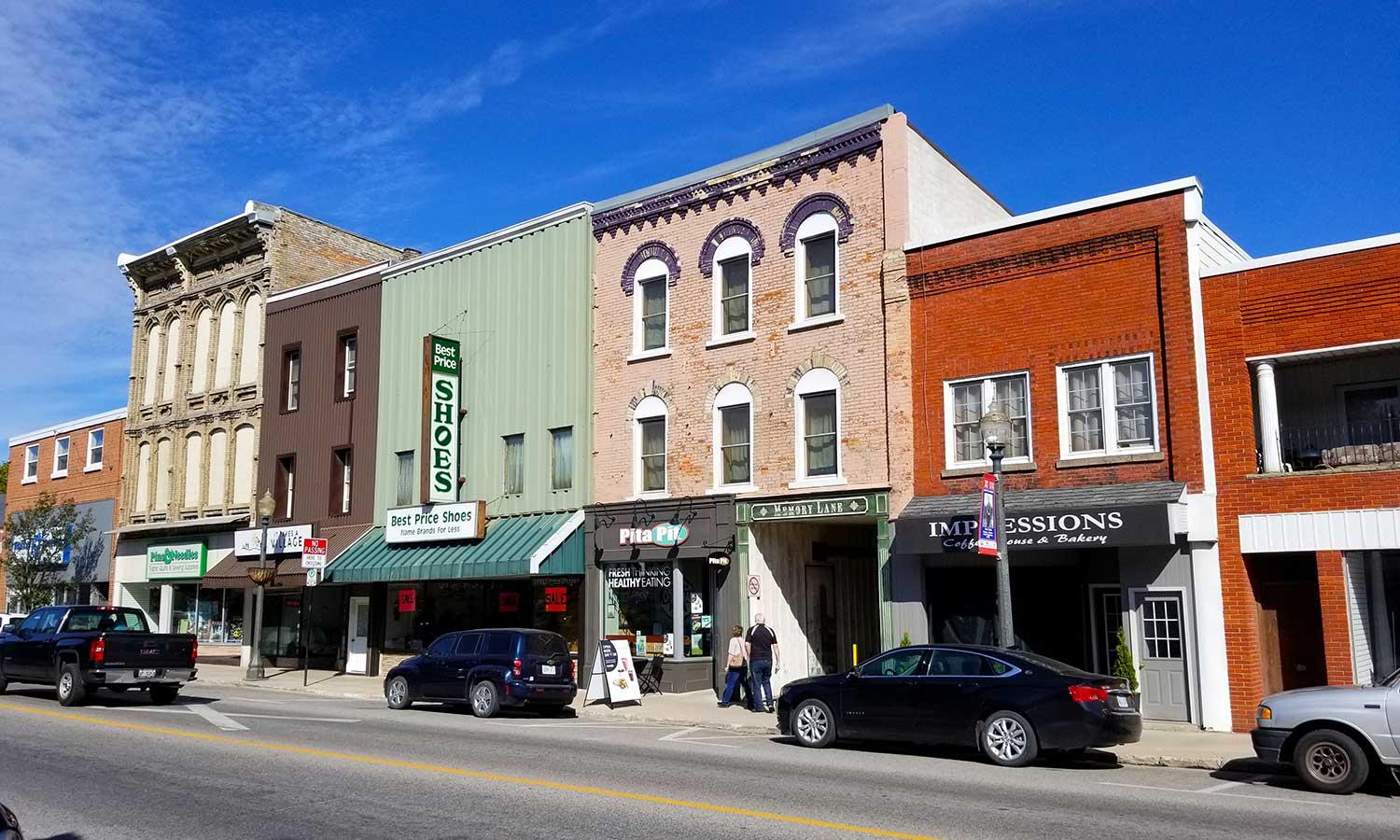
Retail in the county is not monolithic. Stratford’s downtown benefits from tourism and events, while suburban plazas lean on daily-needs anchors and medical users. In the smaller towns, a grocery or hardware store can be the gravitational center for a whole trade node. Appraisals here weigh tenant quality and co-tenancy as heavily as rent level.
Lease structures tilt toward net, but recoveries vary. Some smaller plazas omit management fees in their additional rent, which depresses NOI on paper. Appraisers normalize recoveries to market practice, but only if the lease allows and the tenant mix can bear it. Pay attention to exclusivity clauses and restrictive covenants. A dental clinic with a five-year exclusive may keep another high-paying medical use from backfilling a vacancy.
Sales comparables can look rich when a national pharmacy or grocer is on a long lease. Strip out the outsized covenant and the cap rate for the remainder may be materially higher. For unanchored, mom-and-pop retail, investors frequently shade rents for vacancy risk and leasing costs. Rental rates in these settings move in small increments, and free rent or tenant improvement packages can vary widely. Valuation must capture those inducements in an effective rent analysis.
Parking ratios and site access often trump building condition. A plaza with poor left turns can sit half empty while a similar building across the street hums along. Signage rights and pylon inclusions are worth real dollars. An appraiser who reads leases carefully will catch that a key tenant’s pylon face drives 20 percent of walk-ins, and that losing it at renewal would drag sales and, ultimately, rent.
Office: stable, service-oriented, and sensitive to fit-out
Offices in Perth County lean service-based, with medical, professional services, and government uses anchoring most buildings. Demand for large, speculative office blocks is modest. The market rewards efficient floor plates, ample parking, elevator service where needed, and barrier-free access. In many towns the best space is in mixed-use settings or renovated heritage buildings that blend character with modern systems.
Rents hinge on build-out. A second-generation medical suite with sinks and a reception area rents better than shell space, and the capital sunk into that fit-out belongs in the valuation narrative. Tenants often sign five to ten-year terms with step-ups modestly below urban norms. Given limited backfill options, landlords sometimes accept longer free rent periods in exchange for longer terms.
Vacancy risk deserves careful sizing. A building with three tenants at roughly equal shares carries less re-leasing risk than a single-tenant box, even if the single tenant is strong today. Office cap rates generally run higher than prime retail and roughly in line with or slightly above industrial in this area, especially for buildings without medical or public sector anchors. Elevators, sprinklers, and fresh mechanicals help shave risk premiums.
Land valuation: zoning and servicing are the pivot
Commercial and industrial land trades infrequently, which puts pressure on the direct comparison approach. Appraisers triangulate value by adjusting for:
- Zoning permissions and likelihood of rezoning, tied to official plan policies, frontage, and adjacency to compatible uses
- Servicing status, including water, sanitary, storm, road access, and any off-site levy obligations
- Site shape, topography, and environmental encumbrances that affect layout and net developable area
- Timing to approvals, including site plan control and potential traffic studies
- Market depth for the proposed product, evidenced by pre-leasing or comparable absorption
In Perth County, fully serviced, employment-zoned parcels near major arterials tend to attract regional buyers who benchmark pricing per acre against nearby cities, less a discount for absorption pace. Rural commercial corners without full services may sell on a lower per-acre basis but sometimes net similar returns after development costs, especially for shallow-bay retail or contractor yards.
For agricultural or transition lands, appraisers must respect provincial policy frameworks and municipal growth allocations. Speculative premiums can show up in bids, but defensible appraisal value usually hinges on a realistic probability and timeline of conversion to urban use.
The data problem in small markets, and how to solve it
In thin markets, a single sale or lease can skew perception. The solution is disciplined triangulation. If direct evidence is sparse, widen the search area to comparable towns with similar income levels and tenant bases, then adjust for travel times, population, and building utility. Supplement with broker interviews and, when possible, anonymized rent rolls. Always reconcile back to what local lenders would accept for debt coverage. When the math breaks, revisit your rent and vacancy assumptions.
For stabilized assets, a practical underwriting test helps anchor the cap rate:
- Start with market rent supported by at least three comparable leases
- Deduct a normalized structural vacancy and credit loss consistent with local history
- Use actual, verifiable operating costs, but test them against market benchmarks to catch anomalies
If the resulting NOI, capitalized at the proposed rate, implies a value that would not clear debt service at realistic interest rates and amortization, your cap is too low, or your rent and vacancy assumptions are too rosy.
Environmental, building systems, and hidden value eroders
Older industrial and some retail sites may carry environmental risk. A Phase I ESA is standard before acquisition financing. If a Phase II finds exceedances, remediation costs and stigma must be reflected. Even after cleanup, lenders may reserve or price loans as if some risk remains. A clean letter from a reputable consultant can materially lower the cap rate spread required by investors.
Roof age and type, HVAC system condition, and electrical capacity can swing expenses by dollars per square foot each year. Consider two similar-looking industrial buildings. One has a 20-year-old ballasted roof nearing end of life, limited insulation, and scattered unit heaters. The other was re-roofed five years ago with a fully adhered membrane and upgraded insulation, plus energy-efficient heaters. The second building’s lower utility and capital call risk will support slightly higher rent and a tighter cap.
For office and medical buildings, elevator modernization cycles and accessibility compliance are frequent blind spots. Catch-up costs on life safety systems climb quickly, and lenders often escrow for them. An appraiser who models a near-term capital spend within a discounted cash flow avoids over-stating going-in yields.
Two brief case snapshots from the field
A 60,000-square-foot manufacturing building outside Stratford changed hands after the long-term owner consolidated operations. The building had 18-foot clear, 2 dock doors, 3 drive-in doors, and 2,500 amps. A local contractor signed a ten-year net lease with two five-year renewals. Market rent support came from four leases in neighboring counties within 15 percent of the subject’s asking rate. The buyer’s lender underwrote at a 7.5 percent cap with a 1.35 debt service coverage ratio, given a modest tenant improvement package and a six-month rent abatement. The appraisal’s reconciled cap rate matched at 7.5 percent, anchored by the lease covenant, utility, and clear path to re-tenanting if needed.
In a small-town retail plaza of 28,000 square feet, a pharmacy and a grocery anchored the site on long terms. The rest of the mix was local services. Reported NOI looked strong, but leases revealed that two inline tenants had fixed gross rents that capped recoveries. After normalizing expenses and truing up vacancy and structural reserve, the stabilized NOI was 6 percent below the brochure. The appraised value still supported the buyer’s price because the anchors’ covenants trimmed the cap rate to the low 6s for their portions, while the inlines were capitalized higher. A blended yield analysis kept lender and buyer aligned.
Lender expectations and a quiet stack of unwritten rules
Regional lenders active in Perth County prefer clean, supportable rent rolls and clear environmental files. They want a sober view of re-leasing costs and downtime. Many apply a minimum vacancy allowance even on fully occupied buildings, often between 3 and 5 percent for industrial and office, and a bit lower when anchored retail is in place. They will haircut rents above market and adjust for step-ups that are back-weighted.
If your commercial property assessment in Perth County for financing is running into questions, check the underwriting assumptions before debating the cap rate. Often the friction is not the cap, but the rent, recoveries, or downtime.
Choosing the right appraisal partner
Not all assignments need a major-firm banner, but complex files do benefit from deep benches. When comparing commercial building appraisers in Perth County, ask about recent sector experience, not just the count of reports delivered. Look for transparent reconciliation between approaches, clear lease abstracts, and explicit cap rate support. If the property has land with future intensification potential, check that the team has handled commercial land appraisals in Perth County or comparable regions with similar policy frameworks.
Speed has value, but thin files come back to haunt a deal. Quality appraisals anticipate lender questions, draw on multiple data points, and own their adjustments in plain language. If you need a refreshed value for tax appeal, acquisition, or internal decision-making, some commercial appraisal companies in Perth County offer market updates that bridge between full narrative reports and desktop reviews. Those can be useful when market conditions are moving quickly, provided the scope is clear.
Common pitfalls owners can avoid
One recurring issue is misalignment between reported rents and lease language. If additional rent does not pass through certain expenses, the NOI used in the income approach must reflect that. Another is underestimating capital needs. A roof at the end of its life, or an HVAC system due for replacement, should be priced into value either as a deduction or via a DCF. Finally, over-reliance on a recent outlier sale can skew value up or down. Appraisers should explain why they weighted or discounted each comparable.
A short owner’s prep checklist that pays for itself
- Gather full, executed leases, amendments, and estoppel certificates, plus a 24-month rent roll history with payment records
- Provide recent operating statements with a clear breakdown of recoveries, capital expenditures, and one-time items
- Share environmental reports, building condition assessments, and any roof or mechanical warranties
- Confirm zoning, site plan approvals, and any minor variances or non-conforming rights
- Disclose pending renewals, tenant improvement commitments, free rent, or letters of intent
Having these in hand accelerates timelines and lowers the risk of conservative assumptions filling gaps.
What really moves the cap rate in Perth County
- Lease term and covenant strength, weighted by tenant concentration and default risk
- Building utility, including clear height, loading, parking, barrier-free access, and mechanical capacity
- Location dynamics, such as visibility, access, and proximity to established trade nodes and highways
- Market depth and liquidity, reflected in recent comparable trades and lender appetite
- Known or suspected risks, from environmental to major capital items and entitlement uncertainty
These drivers do not operate in isolation. A strong covenant can offset a second-tier location, and an excellent building can overcome a shorter lease if re-leasing prospects are strong.
Practical ranges and how to think about them
Numbers without context mislead, but ranges offer a starting point. For well-located, modern light industrial buildings in Perth County, market rents have often fallen modestly below those in Kitchener-Waterloo while trending above purely rural counterparts. Investors frequently underwrite stabilized cap rates that have, over recent cycles, clustered from the mid-6s to high-7s for better assets, stepping up for older stock or short terms.
Retail anchored by national grocers or pharmacies may attract caps tighter than 7 percent on the anchored portion, while unanchored inline space can stretch higher. Office, unless weighted to medical or government tenants, usually prices with a slight premium to industrial yields, influenced by leasing depth and fit-out costs. Land values vary wide by servicing and zoning. Fully serviced employment land near arterials trades at a substantial premium to unserviced rural commercial corners. Where recent sales are scarce, per-square-foot-of-buildable calculations grounded in probable density can help, but only if approvals are realistic.
An appraiser should present these ranges as context, not a substitute for analysis. The reconciliation section of the report is where real judgment shows, supported by local interviews, comparable grids, and clear explanations.
Where industrial, retail, and office intersect
Mixed-use and adaptive reuse projects show up in Stratford and other nodes, where a ground-floor retail space supports office or studio uses above. Valuation here benefits from separating each income stream and applying sector-appropriate assumptions. A single blended cap rate often masks risks. If retail faces the street with steady footfall, it may deserve a tighter yield than the upstairs office space, which might carry higher leasing and TI costs.
Likewise, industrial straddles into showroom or service retail at arterial intersections. If 30 percent of a building’s GLA is improved as showroom with higher rents, underwrite two rent lines, then weight the blended cap rate accordingly. Ten years from now, that showroom may revert to shop space, and the reversionary rent should be acknowledged.
Putting it together for Perth County decisions
The right commercial building appraisal in Perth County is as much about narrative as numbers. The narrative explains why this building at this corner with these tenants generates this income and deserves this yield. Numbers without narrative are fragile. A report that integrates sector-specific realities, local policy, and credible market evidence will stand up to lender scrutiny and seller pushback alike.
Owners who prepare complete lease packages, disclose building and environmental facts, and align on realistic rent and downtime assumptions find that the appraisal process surfaces fewer surprises. Buyers who probe the income, not just the headline cap rate, avoid paying for NOI that will evaporate after closing. And lenders who demand clear support for cap rates and market rents will continue to fund the assets that fit the county’s economic strengths.
Whether you are working with commercial https://realex.ca/about-realex/ building appraisers in Perth County on a refinance, seeking commercial land appraisers in Perth County to price a development site, or comparing commercial appraisal companies in Perth County for a portfolio valuation, insist on nuance. This is a market that rewards careful reading more than spreadsheets. The evidence is there for those who know where to look, how to adjust, and when to push back on the easy answer.