Market Trends Driving Commercial Real Estate Appraisal in Guelph, Ontario
Guelph does not behave like a big-city market wearing a small-city suit. It has its own economics, shaped by a stable university, a well-educated workforce, strong manufacturing and agri-food roots, and a quality-of-life pitch that consistently attracts residents and businesses from the GTA and Waterloo Region. When you work as a commercial appraiser in Guelph, Ontario, you learn quickly that national headlines only get you halfway. Values turn on local absorption patterns, zoning decisions, construction timelines, and the thin but telling evidence that arrives in clusters of two to five sales at a time.
Below is a grounded look at the forces moving commercial real estate appraisal in Guelph, Ontario right now, how those forces filter through cap rates, rents, and risk, and what buyers, lenders, and owners should watch if they want to avoid surprises at closing. The perspective comes from years of file work across industrial, retail, office, mixed-use, and development land throughout the city and its business parks.
The demand story behind the numbers
Population growth has been the headline for years, but the composition of that growth matters more than the raw count. Guelph pulls in students and faculty for the University of Guelph, managers and engineers who want a short drive to Kitchener-Waterloo, and families who like that the Hanlon Expressway drops them onto Highway 401 in minutes. That mix feeds multiple commercial asset classes at once. Student and young professional housing drives ground-floor retail on arterial routes. Light manufacturing and logistics firms track labour availability and transportation nodes, then chase small-bay industrial space in the Hanlon Creek Business Park or older stock west of the Hanlon.
Immigration has also played a major role. Newcomers start service businesses, expand ethnic grocery concepts in suburban plazas, and push demand for small office suites and warehouse bays. The net effect shows up as deep waiting lists for 1,500 to 5,000 square foot industrial units, sustained footfall for well-located convenience retail, and a fairly resilient owner-user market, even during interest rate shocks.
Appraisers translate these demand patterns into rent growth assumptions and vacancy allowances, then reconcile them with sales evidence. In a market like Guelph, where the data pool is relatively thin compared to Toronto, one or two outlier deals can skew impressions. The discipline lies in understanding which trades are representative and which reflect unique motivations, such as condominiumized industrial with a heavy owner-user premium or a sale-leaseback with above-market rent.
The interest rate cycle and cap rate math
Over the past few years, the rate environment moved from near-zero financing to a sharply higher cost of debt. That changed the mechanics of valuation as much as it changed the monthly cash flow. In practical terms, industrial and grocery-anchored retail cap rates in secondary Ontario markets often expanded by 100 to 200 basis points from their 2021 troughs. Office moved more, and faster, where leasing risk was obvious. In Guelph, the pass-through to values differed by asset and lease profile, but the pattern held: the tighter the tenancy and the more durable the location, the less elastic the cap rate became.
For a commercial real estate appraisal in Guelph, Ontario, the conversation with lenders shifted from “What is market?” to “What survives the debt service coverage test?” Net operating income has to clear debt service comfortably, with stress rates layered in. An industrial condo with a two-year lease at a top-of-market rent looks good on paper, but underwrites brittle. Compare that to a multi-tenant small-bay property at slightly lower average rents with staggered expiries and long-term tenants, and the latter may pencil at a lower cap because the cash flow is sturdier.
Rate softening will not automatically roll cap rates back to their lows. Buyers still price risk around leasing, obsolescence, and legislative pushes on energy performance. Appraisal work in the next 12 to 24 months will likely feature more debates about exit cap rates in discounted cash flows, especially for office and older retail where re-tenanting costs loom larger.
Industrial: scarcity and segmentation
Industrial is where Guelph’s market fundamentals show their clearest hand. Vacancy has been tight for years. In many submarkets the rate hovered in the low single digits, often between 1 and 3 percent depending on quarter and configuration. New supply helped, but not enough to break the scarcity of small-bay units with shipping access and clear heights over 20 feet. Land constraints and long municipal approval cycles keep a lid on speculative builds.
Three truths keep recurring in industrial appraisals:
- Functional relevance beats sheer size. Tenants in Guelph often need 2,000 to 10,000 square feet, one or two truck-level doors, and modest office build-out. Buildings that check those boxes see renewal rates rise and down time shrink.
- Owner-users set the marginal price on smaller assets. A fabrication shop or food processor will frequently pay more per square foot than an investor if occupancy is immediate and improvements align with operations.
- Condo stratification complicates comparables. Industrial condos can trade 10 to 25 percent above similar bay sizes in fee-simple projects, driven by user demand and mortgage affordability calculations rather than pure yield metrics.
From a valuation standpoint, industrial rents in Guelph rose quickly between 2020 and 2023, then moderated as borrowing costs bit. Effective rents for clean small-bay space often sit in a mid-to-high teens per square foot range on a net basis, with outliers for new construction and specialized improvements. On the capital side, stabilized small-bay multi-tenant properties in good locations may price in the mid 5s to low 6s cap range in a neutral rate environment, with older or less functional assets stretching into the 7s. Each deal tells its own story, and many are owner-user transactions that require an appraiser’s careful normalization of imputed rent and utility of improvements.
Office: flight to quality meets local loyalty
Office performance in Guelph does not mirror Toronto’s towers. The city’s inventory leans low and mid-rise, with a meaningful share of medical and professional tenants anchored near the hospital, downtown, or along arterial corridors. Hybrid work reshaped demand, though not as brutally as in higher-rise markets. Tenants have traded up to better finishes and better parking, often without expanding footprints. Landlords who invested in HVAC upgrades, touchless access, and natural light have captured the smaller pool of expansion-minded users.
Vacancy varies by micro-location and building size. Mid-block Class B space without elevating features can sit longer, and gross-up practices become a negotiating lever. In appraisals, gross rents must be parsed carefully against landlord inducements and tenant improvement allowances. Capitalization rates widened more here than industrial or grocery retail, with market evidence in secondary cities frequently landing in the 7 to 9 percent range depending on lease roll, suite mix, and capital needs. Re-tenanting plans, cash allowances, and speculative TI should be explicitly modeled in discounted cash flow work, or risk will be mispriced.
An example from a recent file tells the story. A two-storey professional building near Stone Road, 1980s vintage with updated common areas, had 18 percent vacancy and a heavy rollover cluster in year two. The seller pointed to an 8 cap based on pro forma full occupancy. Our analysis recognized the time and dollars needed to lease the small suites, pegged stabilized NOI two years out, then applied a higher exit cap in the DCF to reflect leasing risk. The reconciled value fell below the pro forma price, and the buyer negotiated additional vendor TI to close the gap. That is Guelph office today: do the leasing math, and bake in the carry.
Retail: convenience, service, and the grocer anchor
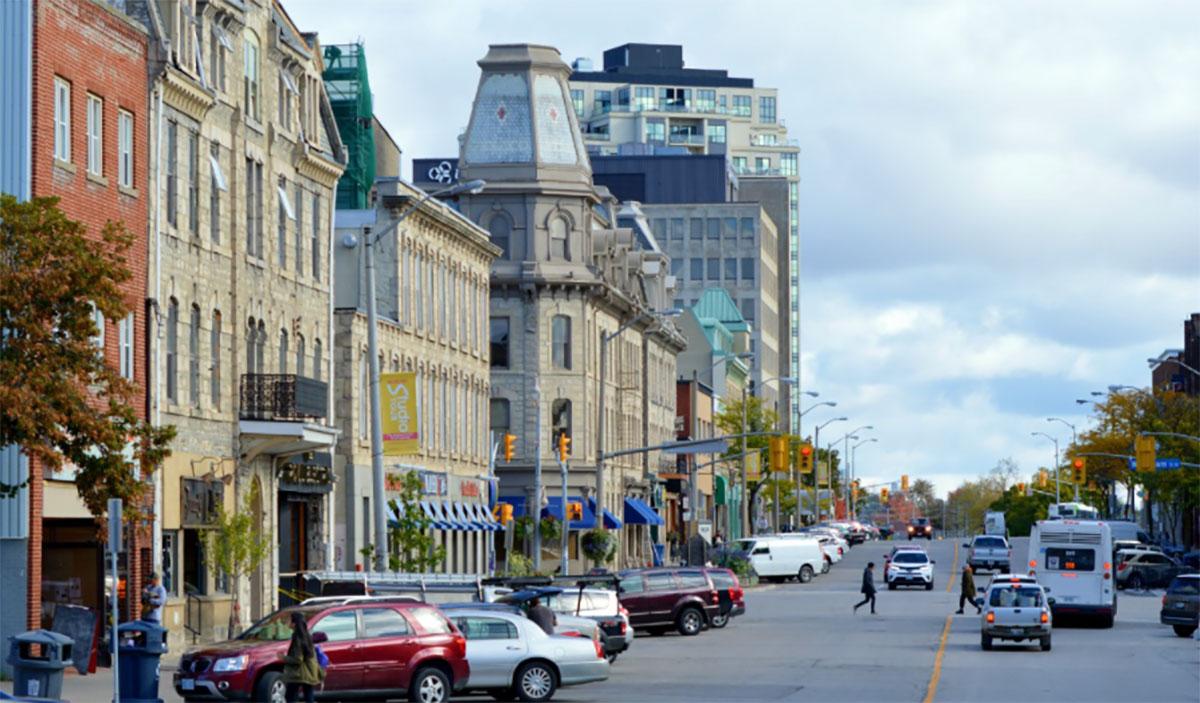
Neighbourhood and community retail in Guelph benefit from steady household formation and a service economy that grows with population. Downtown’s food and beverage scene has proven durable, with churn at the edges but strong demand for the right corners. Power centres with daily needs and national tenants price differently than small strip plazas with local operators, yet both can be resilient when parking, access, and visibility line up.
Appraisers look closely at tenant mix and lease structures. A centre with an essential service anchor will earn a lower cap rate than an unanchored strip of short-term leases. Percentage rent clauses still appear in some restaurant leases, and expense recoveries can be messy in older projects. Effective rents vary widely. Newer suburban plazas might see net rents in the mid 20s to low 30s per square foot for small bays, while older stock along less busy arterials land materially lower. Occupancy cost ratios, especially for independent operators, remain a practical check on whether contracted rent can stick through a cycle.
A note on parking and access: in Guelph, a right-in, right-out on a busy arterial can discourage quick convenience stops. A site plan that solved for that in the 1990s may need rethinking today. That shows up in appraisal through an exposure adjustment or a slightly higher cap to reflect leasing friction.
Development land: entitlements and the time value of everything
Land values in Guelph tend to hinge less on raw acreage and more on entitlements, servicing status, and the credibility of a development team to move dirt. The Clair-Maltby lands on the south end, the Guelph Innovation District, and intensification nodes around stone-cut downtown streets all attract attention. Timing is everything. Carrying costs at modern interest rates forced several groups to slow-roll options or sell partially advanced positions. Appraisals on land now emphasize the probability and timing of approvals, hard and soft cost inflation, and realistic absorption schedules.
Serviced industrial land remains scarce. When parcels inside business parks trade, they do so at a premium that reflects time saved. Residential land is a different story, and while that sits a step outside pure commercial appraisal, mixed-use sites need residential pro formas to make sense of ground-floor retail. It is common now to see developers design much smaller retail components in mixed-use, tailored to one or two destination operators instead of speculative rows of small bays.
Construction costs and ESG nudges
Construction cost inflation has cooled from peak levels but remains well above pre-2020 baselines. In Guelph, that raises tenant improvement budgets and nudges rents upward to sustain returns. Replacement cost is not the primary valuation approach for income assets, yet it exerts gravitational pull. For newer industrial and retail, the cost to build often justifies values that might otherwise seem rich when compared to older stock.
Energy performance, emissions, and environmental liabilities are also front-of-mind. Ontario’s regulatory environment is tightening, lenders increasingly query energy use intensity, and tenants appreciate lower utilities. Appraisers rarely add a green premium as a line item, but they are willing to compress cap rates slightly, or lift rents in underwriting, for buildings with proven efficiency, LED lighting, solar-ready roofs, and good insulation. On the risk side, older industrial with unknown floor drains or historic uses get a discount until environmental due diligence clears them.
Zoning, approvals, and the Hanlon factor
Guelph’s planning environment is organized and rigorous. That does not mean fast. A commercial appraiser in Guelph, Ontario has to read zoning bylaws with care, interpret site-specific exceptions, and confirm that parking ratios and loading rules align with intended use. The Hanlon Expressway upgrades have altered access patterns to some parcels. Where an interchange improved access, land values and achievable rents ticked up. Where median barriers complicated left turns, certain retail pads lost a bit of impulse traffic. These effects are not huge, but they influence exposure adjustments in the sales comparison approach.
Noise and traffic studies around the Hanlon can also weigh on certain uses. For office and medical, proximity without direct frontage is sometimes better than a loud corner. For logistics, direct frontage with simple truck routing wins. Matching use to micro-location is where a local commercial property appraiser in Guelph, Ontario earns their fee.
Data thinness and how to compensate
Compared to Toronto or Mississauga, Guelph offers fewer clean, arm’s-length, fully stabilized sales. A quarterly scan may yield only a handful of directly comparable trades per asset type. That makes broker intel and lease audits crucial, and it increases the weight placed on the income approach, especially when the sales comparison set leans toward owner-user deals.
Two recurring traps deserve attention. First, do not let industrial condo sales set the value for non-condo assets without a sensible adjustment. Second, be careful with sale-leasebacks carrying rents well above market. In both cases, reconcile to what investors will pay for cash flow they believe will persist. If your rent conclusion leans high, explain why. If you must rely on a small sample, show how you screened out non-representative data.
Owner-user dynamics and financing reality
Guelph’s strong cohort of owner-operators skews deal structures. Fabrication shops, trades, and specialty food producers buy buildings for control and fit. Their mortgage underwriting is driven by business cash flow, not just a property’s net operating income. That can push sale prices above what a pure investor would pay. It also means appraisers must sometimes model two values: fee simple as if leased at market, and market value as is, recognizing that the most probable buyer is an owner-user.
Financing conditions feed directly into this. Banks in the region tend to know their borrowers well, but they are stricter on loan-to-value and debt service coverage than they were a few years ago. Shorter amortizations or higher stress rates are common. A commercial appraisal services firm in Guelph, Ontario now fields more lender questions about pre-leasing, rollover schedules, and capital expenditure reserves. That scrutiny shows up in slightly wider caps for assets with chunky near-term lease expiries.
Practical pricing signals by asset type
If you need a quick mental model for where values often settle in Guelph, here is a compact guide. Treat these as directional ranges that shift with lease quality, location, and interest rates.
- Small-bay industrial, multi-tenant: Often trades in the mid 5s to low 7s cap range. Higher for older or functionally challenged stock, lower for new, stabilized product with sticky tenants.
- Single-tenant industrial with short term remaining: Price moves with tenant credit and re-leasing risk. Cap rates can jump 100 to 200 bps higher than the same building with a long lease.
- Grocery-anchored retail: Lower cap rates than unanchored strips, frequently in the 5s to 6s depending on covenant, lease term, and co-tenant mix.
- Unanchored suburban retail strips: Commonly in the high 6s to 8s, with variability tied to tenant quality and visibility.
- Low to mid-rise office: Often 7 to 9 caps, with a premium for medical and a discount for Class B with near-term rollover or large vacant blocks.
These are not rules. They are snapshots that a commercial appraiser in Guelph, Ontario would adjust once real leases, expenses, and capital plans are in hand.

Student housing and downtown mixed-use
The University of Guelph punches above its weight for a city this size. Student demand underpins much of the downtown rental market, which in turn supports ground-floor retail and service uses. Mixed-use appraisals downtown must parse how much rent is truly durable once a wave of new student beds opens or a policy change affects parking minimums. Retail at grade does well when it caters to daily needs, coffee, fitness, and food. It struggles when it relies on occasional traffic or high ticket discretionary spend.
In the last few years, several mixed-use projects trimmed retail footprints or designed flexible floor plates to allow soft conversion between retail and small office or service uses. Appraisers should acknowledge that optionality when estimating downtime and tenant improvements. A highly divisible ground floor with good utilities and multiple entrances reduces risk, which can translate into slightly lower cap rates than a monolithic bay that only suits one type of tenant.
The sustainability of rent growth
Rents leapt quickly in 2021 and 2022 for industrial and certain retail segments, then flattened as rate hikes bit into expansion plans. The question now is whether Guelph’s rent levels are sustainable. For industrial, the answer tends to be yes if units remain scarce and replacement cost stays high, but rent growth may return to low single digits rather than the double-digit spikes of recent memory. For office, tenant improvement costs act as a governor. Landlords must sometimes grant generous allowances or free rent to land a tenant, which reduces effective rent. Retail sits in between, with strong locations holding and weaker ones needing to trim rates to fill bays.
When I underwrite, I ask whether the current rent would be achievable tomorrow if the tenant left. If yes, I am comfortable with it. If not, I treat a portion as above-market and either haircut it in the income approach or increase my cap rate to capture reversion risk. That judgment call separates a mechanical valuation from a market-reflective one.
Municipal policy and the approval queue
Guelph’s Official Plan, zoning framework, and development charges shape feasibility. Intensification targets push more height and density along corridors, which can benefit commercial at grade by delivering more customers. At the same time, parking ratios and loading standards in older bylaws can complicate adaptive reuse. Commercial property appraisers in Guelph, Ontario spend real time conferring with planning staff to confirm whether a proposed use is as-of-right or needs relief. The time to secure variances or site plan approval is not trivial. Populate your cash flows with credible entitlement timelines, not wishful ones.
What lenders and investors are asking right now
In conversations around commercial property appraisal in Guelph, Ontario, a set of recurring questions comes up. They are practical and, in most files, determinative.
- How realistic are the rent assumptions relative to true market, not just asking rates, and what is the path to stabilization?
- Where does the debt service coverage land under stress rates, and does the lease expiry schedule create DSCR dips?
- What capital expenditures are baked in over the next five years, and who funds them under the lease language?
- Does the micro-location help or hinder access, visibility, and logistics, considering changes along the Hanlon and key arterials?
- Are there environmental, building systems, or functional obsolescence issues that require price protection?
Notice how few of these are solved by a single comparable sale. They demand synthesis of leases, building condition, location nuance, and the financing environment.
Edge cases that trap the unwary
Every market has quirks. In Guelph, a few pop up often enough to merit a warning. Industrial flex buildings with heavy office build-out underperform unless the tenant mix truly values it. Older retail on the wrong side of a median may post acceptable occupancy but at rents that look fine only because landlords inflated allowances. Medical office close to the hospital can look like a slam dunk until you discover dated HVAC that cannot support modern clinic layouts without costly upgrades. And then there is parking. For certain uses, especially personal services and clinics, under-parked sites struggle no matter how charming the façade.
Finally, do not overlook tax differentials. Some properties with historic assessment quirks carry taxes that mislead on expenses. Normalize them to current assessment expectations, or you will misstate NOI and skew value.
Choosing the right professional lens
The best commercial appraisal services in Guelph, Ontario bring three things: data access, building literacy, and local judgment. Data access means broker relationships and lease intel beyond what public records reveal. Building literacy means knowing the cost and disruption of swapping rooftop units, the lease language that shifts replacement obligations, and the logistics of turning a 1980s office into medical space. Local judgment means understanding which corners rent, which do not, and how approval timelines stretch in practice.
When you review reports, look for appraisers who explain why they excluded certain comparables, who disclose where they leaned on the income approach and why, and who model conservative but plausible timelines for lease-up and capital work. Cookie-cutter templates do not survive contact with Guelph’s reality.
A closing compass for owners and buyers
The market is not static, but value principles keep their footing. Buyer pools are deeper for assets that solve operational needs and minimize surprises. The most reliable rent is the rent a tenant can afford after paying for the improvements they need. Functional relevance beats architectural flair. Time kills deals, and entitlements control time. Cap rates move with risk, not just interest rates. And in a city like Guelph, where evidence is thin but demand is steady, the job of a commercial real estate appraisal in Guelph, Ontario is to separate noise from pattern.
If you are preparing to sell or refinance, invest in the story that matters to valuers. Gather clean leases, show your trailing twelve months https://rivertret489.raidersfanteamshop.com/commercial-building-appraisal-guelph-ontario-common-pitfalls-to-avoid-1 of expenses with reconciliation, document capital upgrades, and describe the tenant mix in business terms, not just names and suite numbers. If you are buying, pressure test the rent roll against today’s demand, not last year’s momentum, and ask hard questions about rollover, allowances, and mechanical systems.
Guelph rewards that kind of discipline. It is a market with enough growth to make development pencil, enough scarcity to keep stabilized assets valuable, and enough local nuance to punish overconfident assumptions. For owners, lenders, and investors who work with seasoned commercial property appraisers in Guelph, Ontario, the opportunities are real, and the path to credible value runs straight through the details.