When to Hire Commercial Land Appraisers in Waterloo Region for Development Projects
Waterloo Region rewards good timing. Kitchener, Waterloo, Cambridge, and the surrounding townships have added people, transit, and new employers at a steady clip for more than a decade. That growth changes the ground beneath a project, sometimes literally. Parcels that penciled as surface parking in 2016 are now feasible for mid-rise residential with ground floor retail. Former small-bay industrial along the 401 is being aggregated for logistics and advanced manufacturing. Planning policy is pushing height along ION stations, while townships weigh rural servicing limits and agricultural protection. In that context, knowing when to bring in commercial land appraisers is not a nicety. It is a line item that can save months and seven figures.
I have watched buyers run modeling marathons on pro formas, only to skip the piece that checks the market’s pulse and the site’s highest and best use. An appraisal can feel like a lender requirement, not a development tool. That misses its value. In Waterloo Region, a thoughtful commercial land appraisal ties planning reality, comparable evidence, cost pressure, and yield into something a municipal planner, equity partner, and credit committee can all read and respect.
Appraisal is not assessment, and the distinction matters
Two words get mixed up all the time: appraisal and assessment. Assessment in Ontario is the mass-valuation process used by MPAC for property taxation. Developers sometimes refer to a commercial property assessment in Waterloo Region when they mean a point-in-time market value opinion, but the mechanics and purpose differ. MPAC’s assessed values follow their own cycle and methodology. An appraisal is an independent estimate of market value for a specific purpose, date, and definition of interest, usually prepared under the Canadian Uniform Standards of Professional Appraisal Practice. Banks underwrite with it. Partners negotiate with it. Tribunals accept it.
If you are modeling a deal, selling to a REIT, or negotiating with a municipality on land dedications, you need an appraisal, not an assessment. If you are appealing your tax burden, you may need an appraiser to support that assessment appeal, but it is a different type of engagement and report.
Moments when bringing in commercial land appraisers pays off
The calendar of a development has natural inflection points. Some are obvious, like financing. Others feel optional until they are not, like early zoning risk checks. In my experience, five triggers justify hiring commercial land appraisers in Waterloo Region.
- Before waiving conditions on a purchase, especially with zoning or servicing risk.
- When preparing a rezoning or minor variance package that needs market support for density, parking reductions, or community benefits.
- During capital raising or refinancing, where equity and debt partners require defensible land value and sensitivity analysis.
- If expropriation, easements, or dedications will change the developable area or access.
- When disputes arise among partners or with vendors on adjustments at closing.
Just because you can push forward without a report does not mean you should. On a $7 million site, a valuation variance of 5 to 10 percent dwarfs the cost of a rigorous opinion.
What a competent appraisal covers in this market
Any land report worth the paper will tackle four pillars. Highest and best use is first, tested for legal permissibility, physical possibility, financial feasibility, and maximum productivity. In Waterloo Region that means reading the Official Plan, zoning by-laws, and secondary plans with care. The ION corridor has station area policies that support height and mixed use. Nodes around King and Victoria in Kitchener and around the University and business parks in Waterloo have their own intent. Parking minimums drop near transit. Cash-in-lieu for parking can come into play. Where inclusionary zoning has been studied or adopted, density trade-offs affect residual values, and an appraiser should reflect what is on paper and in practice.
Servicing is the second pillar. Infill parcels may be constrained by water or sanitary capacity and by stormwater limits. In greenfield areas such as Breslau or North Cambridge, trunk timing and front-ended development https://rentry.co/yg4q6q2g charges can tilt feasibility. The report should integrate known municipal servicing data and development charge schedules, not gloss over them with a generic line.
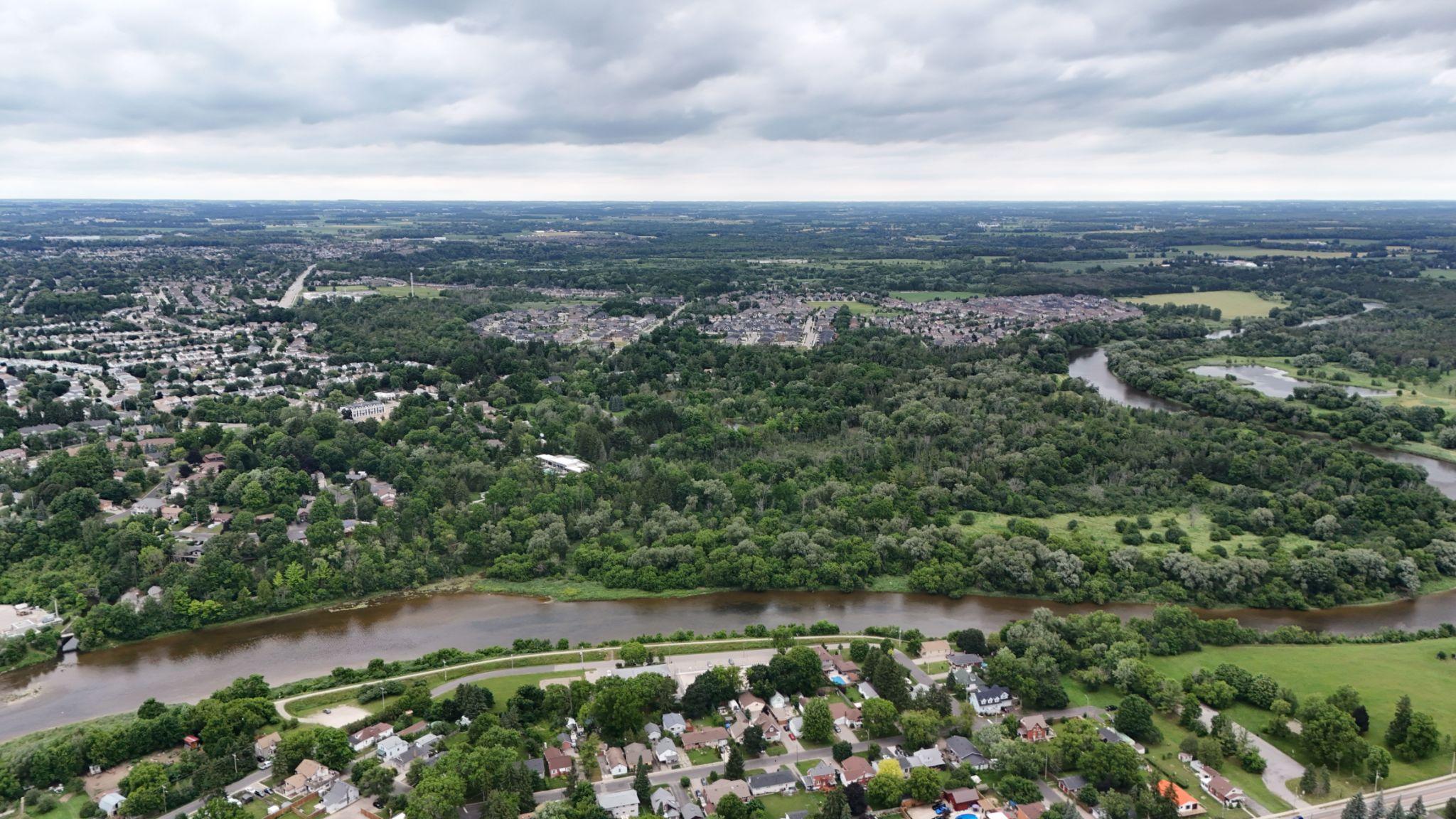
Third, physical and environmental conditions matter more than people admit. The Grand River Conservation Authority can restrict development in floodplains and regulated areas. A site that looks flat on aerials can sit behind a flood fringe line that reduces achievable coverage. Former industrial properties often carry environmental site assessment conditions, risk management plans, and excess soils obligations under O. Reg. 406/19. A good appraiser will treat those as more than caveats. They adjust value or justify extraordinary assumptions.
Finally, market evidence: comparable sales, current listings, land-to-buildable ratios, achievable rents and cap rates. The report should show how raw dirt translates into income-bearing space. In Waterloo Region, mid-rise wood frame along the LRT often sells on a price per buildable square foot basis, while industrial land trades per acre with a premium for 401 proximity and serviceability. There is no single yardstick across uses, so the analysis needs to be granular.
The pre-acquisition window
Most developers who get caught out do so right before waiving. They have a term sheet for debt, placeholder numbers for parkland and community benefits, and a plan to rezone for a slightly taller envelope. The seller’s broker is whispering about unreported comps from down the street. The clock is loud. That is the moment to order an appraisal with a narrow, two-week scope: present use value based on as-is zoning, a second value assuming rezoning to a specific massing, and a sensitivity on parkland and inclusionary fees. You are not trying to forecast construction costs to the penny. You want a defensible land value range that shows equity where the plan still works if the City says three floors less or if underground parking costs come in 15 percent higher.

A few years back, a client looked at a 0.8-acre site near a station with a 12-storey aspiration. The appraiser modeled value at 8 and 10 storeys using current corridors policy and spoke directly with planning staff to test support. The lender underwrote to 8. The buyer shaved the price by $800,000 and still won the deal. Six months later, site plan drawings landed at 9 storeys. Without that early appraisal, they would have bought at the seller’s story, not the market’s.
Zoning files and market support
Municipalities do not set land value, but they live with the consequences of bad assumptions. If you are pushing for a parking reduction on Hespeler Road or greater height by the ION in Uptown, be prepared to submit market evidence showing that rents, unit mix, and absorption support the community benefits you are offering. Appraisers are not planners, yet a pair of pages in the planning rationale with thin rent assumptions invites questions. I prefer to attach a short appraisal memorandum that sets out achievable retail rents for the frontage, likely office absorption for a mixed-use podium, or realistic industrial sale pricing for a conversion. It avoids circular logic during public meetings.
Debt, equity, and the uses of a report
Lenders tend to prefer summary narrative reports with sales comparison and, for income properties under redevelopment, a land residual cross-check. Equity partners like to see the moving pieces in a pro forma linked to supportable market inputs. A high-quality valuation can serve both if scoped correctly.
For land in Waterloo Region, I expect three approaches to get airtime:
-
Sales comparison, using land-sales comps adjusted for zoning, density, services, and timing. If a site at King and Victoria trades at $120 per buildable square foot with zoning in hand, your unzoned parcel a station away will not trade at that number, but it may bracket $80 to $100 assuming a realistic entitlement path.
-
Residual land value, where you model stabilized net operating income for the proposed project, apply cap rates or exit pricing, back out hard and soft costs, profit, fees, and time, and solve for land. This method is sensitive. A 25 basis point cap rate shift or 5 percent construction cost swing can move land value materially. Done transparently, it is persuasive.
-
Direct capitalization or discounted cash flow on interim income if the site has an income-producing building that will remain for a time. For example, a small-bay industrial property near Franklin Boulevard that you will hold for two years before redevelopment. That income has time value and risk, and a lender will ask for it.
Do not accept a report that only nods to one method without addressing why the others do or do not apply. When we underwrite mixed-use along the LRT, we look closely at retail rents on secondary frontages, which often land in the low to mid 30s per square foot gross for small bays, with tenant improvement allowances higher than they were five years ago. Office above grade can be slow unless pre-leased to a known user. A capable appraiser will interrogate those points and show their math.
Expropriation, easements, and dedications
Road widenings on arterial corridors, daylight triangles, and hydro easements are part of life here. They change usable area, access, and therefore value. I have seen 5 to 15 percent of a parcel’s site area disappear on a corner lot after dedications. If you are facing a taking under Ontario’s Expropriations Act, bring in an appraiser with that file type on their desk. The valuation standard can involve market value, injurious affection, and disturbance damages. The negotiation runs smoother when your expert understands how the proposed plan clips the developable envelope or complicates loading and can translate that into supportable loss.
Greenfield, infill, and the edge cases
Township land looks easy on maps. Big parcels, clear shapes, fewer neighbors. It comes with its own traps. Agricultural designations limit permitted uses. Minimum Distance Separation from livestock operations can affect where residential is allowed. Aggregate resource designations near pits change the conversation entirely. If you are chasing logistics land near the airport and 401, the difference between full municipal services and partial or private services matters. A commercial land appraiser in Waterloo Region who has worked on Woolwich or North Dumfries files will know how to read those constraints and price them in.
Infill is a different animal. Heritage overlays in parts of Galt, site contamination downtown, and small assemblies can erode efficiency. If the parcel has an existing commercial building, you may need two pieces of work: a commercial building appraisal in Waterloo Region to value the going-concern income through a hold period, and a residual land analysis for the post-assembly redevelopment. Good commercial building appraisers in Waterloo Region will coordinate with the land specialist so that assumptions match.
Local market texture that shifts value
A handful of patterns keep showing up in deals across the region:
-
Industrial land near the 401 fetches premiums, especially for parcels with immediate highway access and services. Depth for truck courts and outside storage rights can move value by six figures per acre.
-
Mid-rise residential along the ION performs stronger on sites within a short walk of stations. Parking relief helps the pro forma. Where municipalities allow higher lot coverage with quality amenity, residual values can justify stronger offers.
-
Retail nodes with strong daily needs traffic, such as along Fischer-Hallman or Highland, can command stable rents for essential retail but show softness in mid-size discretionary bays. If your mixed-use plan depends on 3,000 to 5,000 square foot tenants at premium rents, test that assumption with current leasing brokers and an appraiser who is tracking concessions.
-
Office remains bifurcated. Institutional and tech users with specific needs do fine in tailored buildings, but speculative suburban office without anchors is slower. For land that assumes office components, be conservative unless you have leads.
Appraisers who work in the region see those nuances inside their comparable sets. Ask them to articulate how each nuance shows up in adjustments.
Working with commercial appraisal companies in Waterloo Region
Not all firms are equal across asset classes. Some groups excel at industrial and land. Others live in retail. Ask for two recent files similar to yours, redacted, and look at the methodology and clarity. Local commercial appraisal companies in Waterloo Region know which sales are real trades and which are family transfers or assemblages with atypical terms. They also know when to call municipal staff for clarification and when to rely strictly on written policy.
Be clear about the definition of value you need. Fair market value for financing is different from market value for expropriation, and different again from investment value to a specific user. Outline any extraordinary assumptions, such as rezoning to a specific density or environmental remediation at a budgeted cost with no unexpected conditions. When those assumptions change, the value can change, and you want the report to make that linkage explicit.
Timelines, costs, and what is realistic
Expect two to four weeks for a thorough land appraisal if data and access flow. Complex files with multiple scenarios or expropriation components can stretch beyond a month. Fees for commercial land in this region typically sit in the mid four figures for simpler assignments and into the low five figures for large, multi-scenario work. If your lender needs a specific form or a short review cycle, flag it early. Rushed appraisals cost more and risk thin analysis.
What lenders and municipalities expect to see
Credit teams want clear comparable grids, logical adjustments, reconciled conclusions, and sensitivity around key variables. They rarely read every narrative page, but they will circle the rent roll assumptions, cap rates, and cost inputs and ask how those link to evidence. Municipal reviewers, when an appraisal is attached to a planning file, look for credible support for claimed project economics, especially where community benefits or parking reductions hinge on them. If you are filing a community benefits charge appeal or negotiating parkland, your appraiser should be prepared to defend the methodology and inputs in a hearing room, not just on paper.
Pitfalls that sink value
Two errors recur. First, treating zoning as a suggestion rather than a constraint with a probability. Appraisers should not opine on planning merits, but they can and should reflect realistic entitlement risk in the valuation. If the report prices the land as if a 20-storey approval is guaranteed where policy points to 12, you are buying a story. Second, importing cap rates, rents, or land-to-buildable ratios from Toronto without adjustment. Waterloo Region is its own market. It trades differently. Even within the region, Uptown Waterloo and Downtown Kitchener do not behave exactly the same.
I also watch for missing line items. Development charges change. Community benefits charges, where applicable, cap at a percentage of land value but still matter. Cash-in-lieu of parkland has formulas that cut deeper on some assemblies than others. Excess soils costs can hit six figures on tight urban sites. If those are not in the residual, value is wrong.
How to prepare so the appraisal adds real value
Here is a short, practical checklist to make the first draft more accurate and the process smoother.
- Provide a clean package of title, surveys, site plans, and any environmental or geotechnical reports, even if draft.
- Summarize known discussions with planning staff and any pre-consultation notes that touch height, density, and parking.
- Share your current pro forma with assumptions for rents, costs, timelines, and exit metrics, flagged where they are soft.
- Identify third-party agreements that touch the site, like shared access, restrictive covenants, or leases that will carry through.
- Agree on scenarios to test, with specific massing, use mix, and timing, so the appraiser can model apples to apples.
Developers sometimes hold pro formas close, worried an appraiser will adopt conservative inputs. In practice, a candid starting point triggers a better conversation. The appraiser brings comparables and market discipline. You bring cost reality and design intent. Between the two, you avoid magical thinking.
Where commercial building appraisers fit in mixed projects
Many development parcels carry income for a period before demolition or integrate a retained structure. For example, a former bank branch on a corner in Preston might operate for 18 months while entitlements advance. In those cases you need a commercial building appraisal in Waterloo Region to value the interim income and the going-concern risks. The building value informs bridge financing and partner distributions. Later, once construction is complete, lenders will order as-complete or as-stabilized valuations for draw monitoring and takeout loans. Keeping the same firm through the arc, when they are competent across land and building work, saves translation errors.
If your advisory bench is thin, speak with two or three commercial appraisal companies in Waterloo Region about their capacity to handle both land and building assignments. Confirm who signs the report. Senior signatories matter when a file goes to committee or tribunal.
A note on data ranges and how to read them
Markets move. In the past two years, I have seen cap rates on stabilized urban retail in the core widen by tens of basis points, then firm up again for well-located essential retail. Industrial land per acre near the 401 has seen swings influenced by borrowing costs and construction pricing. When an appraiser presents ranges rather than precise points, they are reflecting the truth that value sits on a spectrum shaped by inputs and probabilities. Your job is to decide where on that spectrum your deal belongs, and whether the residual holds after cost contingencies and schedule risk. A report that admits uncertainty with ranges, while backing each input with evidence, is more useful than false precision.
Bringing it back to timing
If you take nothing else from this, take the sequence. Hire commercial land appraisers in Waterloo Region at the moments where their work changes your next move: before waiving conditions, when you are crafting a rezoning case that leans on market logic, when you are raising capital, and when external forces like expropriation threaten to carve up your site. Use building specialists when interim income or completed improvements matter. Treat mass appraisal for taxes as a separate lane from market appraisal for deals. And insist on reports that speak plainly, show their math, and respect the local fabric.
The region rewards that discipline. It has for years. Developers who anchor their decisions with grounded valuations tend to hit fewer surprises and recover faster when the market shifts. That is not an academic point. It is a lived one, paid for in deposits saved and sites that still make sense after a reality check. If you need a starting point, ask around for commercial land appraisers Waterloo Region planners and lenders trust. Then bring them into the room early enough that their work can still change the outcome.