Zoning, Highest and Best Use, and Their Role in Perth County Commercial Land Appraisals
Commercial land does not carry value in a vacuum. In Perth County, where settlement areas are tightly defined and agricultural preservation runs deep, value follows policy and permission. When business owners ask why a parcel on the edge of Listowel sells at a multiple of one in a nearby hamlet, the answer often starts in the zoning by-law and ends in the analysis of highest and best use. Appraisers do not just measure square feet and frontage, they weigh what the land is allowed to become, what it can physically hold, and what the market will actually fund.
This piece unpacks how zoning and highest and best use work together in commercial land valuation across Perth County’s municipalities, and how a clear understanding of local planning rules can mean the difference between a viable deal and a write-off. It also touches on how commercial building appraisal in Perth County relies on these same foundations once improvements are present.
Where zoning sits in the value chain
Every commercial land appraisal starts with the legal frame. Perth County is made up of the municipalities of North Perth, Perth East, West Perth, and Perth South, with the City of Stratford and the Town of St. Marys operating as separate, single-tier municipalities within the same regional market. Each has its own Official Plan and zoning by-law, shaped by the Provincial Policy Statement and the Perth County Official Plan where applicable. That means the same size parcel can be worth radically different amounts depending on:
- its designation in the Official Plan and its detailed zone category
- whether it sits in a serviced settlement area or outside it
- access to a provincial highway or a local road
- overlays like floodplain, source water protection, or significant natural heritage
- the presence of site-specific exceptions or holding provisions
Appraisers treat zoning as the first gate. If a use is not permitted on paper, it is out unless a reasonable planning path exists to secure it. Reasonable does not mean optimistic. It means consistent with policy, supported by precedent, and timed within a developer’s runway. An appraiser with local experience will know that rezoning a farm parcel to highway commercial outside a defined settlement area is a non-starter under provincial policy, while adjusting a C2 zone to add a drive-through in Listowel might be achievable with site plan approval and traffic work.
Defining highest and best use in practice
Highest and best use is the backbone of value. In Ontario appraisal practice, the concept is applied twice, as though vacant and as improved, and must meet four tests.
- Legal permissibility. The use complies with zoning, the Official Plan, and other statutory controls, or there is a realistic, supportable path to obtain the necessary approvals.
- Physical possibility. The site’s size, shape, topography, soil, frontage, and access can accommodate the use, along with servicing and environmental conditions.
- Financial feasibility. The project as conceived can attract equity and debt on terms that produce a return proportionate to the risk, considering rents, absorption, and costs.
- Maximum productivity. Among all feasible uses, the one that yields the highest land value is the highest and best use.
These tests are simple on paper and nuanced on the ground. The same 2-acre site can point to two different answers depending on timing and capital. A retail pad with a national covenant may outrank a speculative multi-tenant plaza in today’s interest rate environment, even if the plaza theoretically produces more net rentable area. Conversely, a ground lease to a fuel retailer may be the most productive use for an owner planning to hold for decades, while a merchant developer might prefer a quick-turn shophouse with pre-leased tenants.
How Perth County’s planning context shapes outcomes
If you are new to the county, it is easy to underestimate how strongly policy preserves agricultural land and concentrates growth in defined settlement areas. Several realities shape commercial land values here:
Settlement boundaries. Expansion beyond urban boundaries is tightly controlled. Upzoning greenfield parcels into commercial uses is feasible only within serviced areas like Listowel, Mitchell, or Milverton, and even then must fit the community structure laid out in the Official Plan.
Servicing. Full municipal water and sewer are available in core settlement areas. In rural and hamlet areas, private wells and septic systems limit intensity, particularly for restaurants, food service, or multi-tenant retail that carry high daily flow. A site that looks cheap on a per-acre basis may not support your desired wastewater load.
Access and traffic. Provincial highways cut through several communities. Where an MTO access permit is required, turning movements, stacking, and spacing to intersections can dictate site layout or kill a drive-through. Appraisers will adjust expectations for pad sites with right-in, right-out access only.
Conservation authority constraints. Portions of the county fall under the Maitland Valley, Grand River, and Upper Thames River conservation authorities. Floodplain overlays, regulated areas, and natural heritage features can shrink the developable footprint. On infill parcels near watercourses in St. Marys or Mitchell, flood-proofing and finished floor elevations influence cost, and therefore land value.
Parking and loading. Minimum parking ratios, barrier-free requirements, and loading space standards vary across municipalities. They affect buildable floor area and tenant mix. A planned medical office often needs more parking than a general office, reducing the achievable gross floor area on a tight site.
Noise, odour, and MDS. Proximity to agricultural operations and industrial uses triggers separation requirements. An appraiser will not assume a patio restaurant is feasible beside a feed mill unless local policy and impact studies clear the way.
Reading a zoning by-law like an appraiser
Commercial land appraisers in Perth County spend real time with the by-law maps and text. A proper read does more than confirm permitted uses. It quantifies density and form. Critical clauses include:
- Lot coverage, floor area ratio or density caps, and height limits. These determine development yield.
- Setbacks, step-backs, and daylight triangles. Corners on provincial routes often lose usable area to sightline protection.
- Drive-through and queuing standards. For quick service restaurants, queuing length and bypass lane requirements can cut a site’s rentable depth by 30 percent.
- Parking counts by use. Grocery and medical office standards are often the tightest constraint.
- Landscaping, buffer, and planting strip rules. A 3.0 metre buffer along a shared lot line is common, but some zones demand more beside residential.
- Holding symbols and site-specific exceptions. An H symbol may require servicing upgrades or intersection improvements before building permits can issue.
- Overlay restrictions. Flood fringe, wellhead protection areas, and source water intake zones often add prohibitions on certain uses like dry cleaning or fuel sales.
An appraiser translates these numbers into an efficient site plan envelope. Even a hand-drawn massing study on graph paper can clarify whether the site supports two 3,000 square foot pads with shared parking and a loading bay, or whether the buildable area only fits one pad plus a reduced landscape buffer with minor variances. Those changes roll straight into the land’s indicated value.
A quick vignette: highway commercial in Listowel
A developer looks at a 1.6-acre corner on Wallace Avenue North in Listowel, inside the urban boundary and designated highway commercial. Asking is 1.2 million dollars. The zoning permits retail, restaurant, and service commercial, with a 35 percent lot coverage, minimum 6 metre setbacks, and a maximum height of 12 metres. The MTO controls the main frontage, and the local road allows full moves.
On paper, two pads fit: a 2,500 square foot drive-through and a 7,500 square foot multi-tenant retail strip. Parking at 1 space per 20 square metres yields roughly 55 required stalls. Queuing standards need eight vehicles plus bypass. With landscaping and stormwater, the site can carry roughly 10,000 to 11,000 square feet of gross floor area without variances.
Local market rents for new-build highway commercial in Listowel range from 24 to 32 dollars per square foot net, with typical operating costs and taxes adding 10 to 12 dollars. Cap rates for small retail in secondary markets expanded after 2022 rate hikes, settling in the 6.75 to 7.75 percent band for stabilized assets with decent covenants. Construction costs for single-storey shell retail jumped to 275 to 350 dollars per square foot, plus site works, soft costs, and finance.
An appraiser blends these pieces into a residual analysis. At a blended 28 dollars net, 10,500 square feet, and a 7.25 percent cap, stabilized value might fall around 4.0 million dollars before leasing costs and vacancy reserves. Deduct hard and soft costs, leasing, developer profit, and carrying, and the supportable land value might sit near 900,000 to 1.1 million dollars. If the MTO requires a right-in, right-out on the highway frontage, the queue and circulation could force a smaller pad or kill the drive-through, trimming the residual by 150,000 to 250,000 dollars. The price you can pay follows the envelope the zoning allows and the yield the market rewards.
Downtown mixed use and the nuance of permission
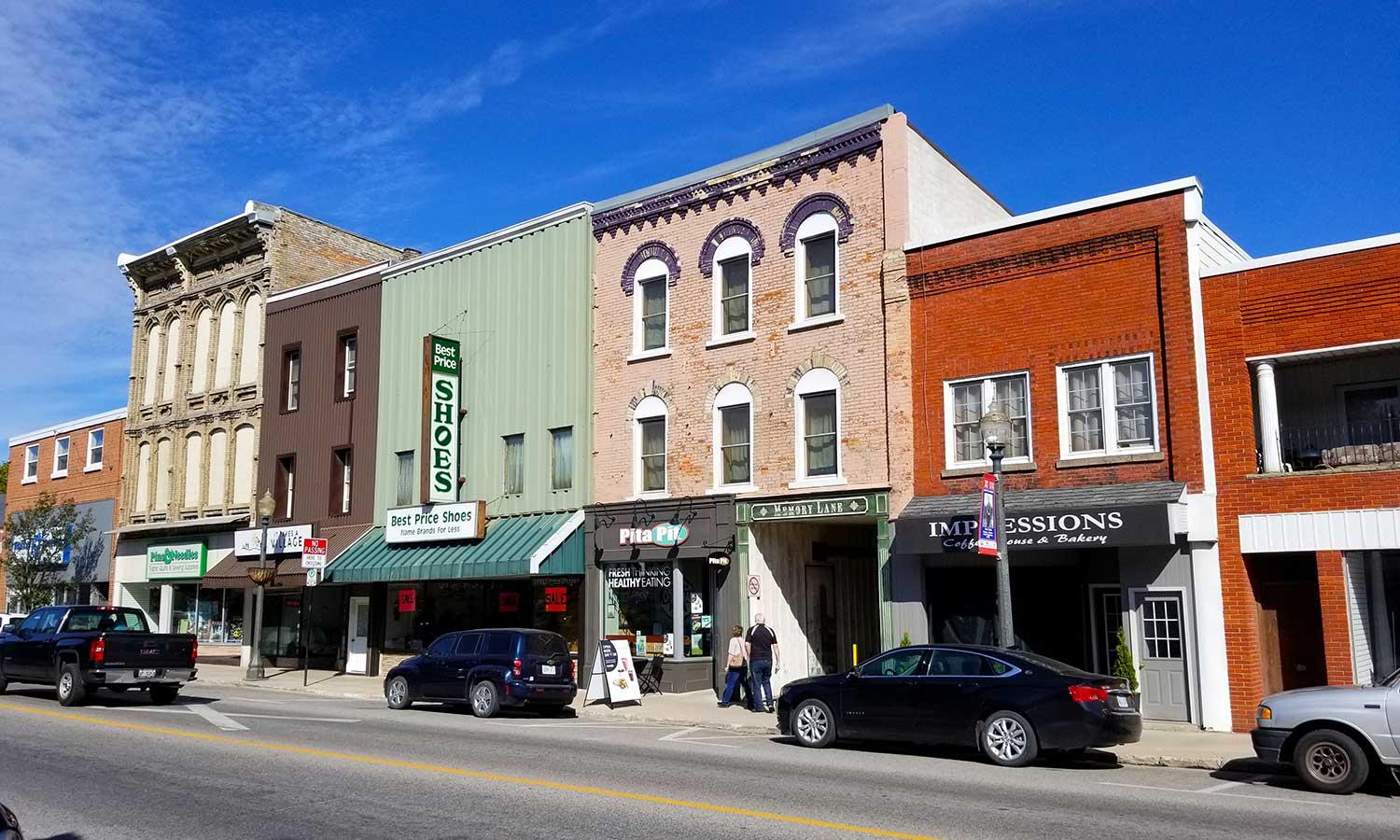
A separate investor weighs a two-storey brick commercial building in Mitchell’s core. Ground floor retail is occupied, the second floor is vacant. The zoning allows apartments above commercial, but there is no elevator and the stairwell is narrow. The building sits inside a heritage conservation district with design guidelines.
Highest and best use as improved may be continued retail and renovated office above, not residential. Even though adding apartments matches policy, the physical constraints and code triggers can make conversion cost-prohibitive. If the ceiling heights are 8 feet and the stair does not meet modern fire separation standards, you can spend six figures before framing in a single suite. An experienced appraiser will test rent potential against actual code-driven costs rather than assume a rosy mixed-use pro forma.
Where Stratford and St. Marys enter the picture, remember that each runs its own by-laws and approval processes, and each has distinct heritage and urban design controls. Commercial appraisal companies in Perth County often work across these boundaries, but their local files will show different timeframes, fees, and political appetites for variances. Values reflect that certainty, or lack of it.
The influence of interest rates and cap rates on land value
Zoning says what you can build. Interest rates and cap rates decide what you can afford to pay for the dirt. Between 2022 and 2024, the cost of debt rose sharply in Canada. Secondary market cap rates followed. In practical terms:
- Small-bay retail and pads that traded at 6.0 to 6.5 percent caps pre-hike often pencilled at 6.75 to 7.75 percent afterward.
- Lender spreads and stress tests pushed required yields higher still, especially for single-tenant assets with shorter terms.
When the terminal yield ticks up 100 basis points, the residual to land shrinks unless rents rise or costs drop. In Perth County, where net rents do not adjust overnight, some deals that worked in 2021 no longer clear feasibility with the same layout. Appraisers update their sales and income evidence accordingly, and the indicated land value moves.
Environmental status, one of the quiet deal makers
Commercial land in older industrial pockets, notably around rail corridors or historic manufacturing, may carry environmental liabilities. Ontario’s Record of Site Condition framework governs whether a change to a more sensitive use is allowed without remediation. A former service station converted to a medical clinic will trigger ministry standards that often require soil and groundwater cleanup.
From a valuation standpoint, contamination risk reduces the supportable land value by the expected cost to achieve the intended use, discounted for time and risk. If a Phase II ESA indicates petroleum hydrocarbons above Table 3 standards and remediation may run 150,000 to 400,000 dollars, an appraiser will deduct that range from the residual. Lenders will too. On a thin pro forma, that can erase the land margin altogether.
When buildings already stand: highest and best use as improved
Many files are not raw land. Owners seek a commercial building appraisal in Perth County to refinance, settle estates, or https://landenrygv122.trexgame.net/how-commercial-building-appraisal-in-perth-county-impacts-your-investment-decisions support a sale. In these cases, highest and best use as improved drives the approach:
- If the existing building is reasonably efficient and leasable at market rent, the highest and best use is often its current use, even if zoning would allow greater density.
- If the improvements are obsolete, underbuilt, or in a location where land value exceeds the depreciated value of the structure, demolition and redevelopment becomes the likely highest and best use.
Take a 1970s 8,000 square foot cinder block plaza on a 1-acre lot in a C2 zone on a main arterial in West Perth. Rents are 12 to 14 dollars net, and the roof and HVAC are reaching end of life. The site could support two new pads with drive-through potential at higher rents. The market might still prefer to hold and reinvest if leasing remains stable and the yield after capital costs beats the return required for a redevelopment. An appraiser will run both scenarios, test lease-up risk, and reconcile to the most defensible conclusion.
This is where the discipline of commercial building appraisers in Perth County shows up. They examine actual tenant covenants, option terms, expense recoveries, and capital reserves. They do not assume a clean net lease where the lease actually caps tax recoveries or pushes HVAC replacements back to the landlord.
Valuation methods that lean on zoning and use
For commercial land, three tools dominate:
Direct comparison. Recent sales of similar zoned parcels in the same municipality or a closely comparable one set the stage. Adjustments line up for size, servicing, corner exposure, access, and conditions of sale. In thin markets, a wider radius is used, but appraisers discount non-comparable contexts. A serviced corner in Listowel does not line up dollar for dollar with an unserviced parcel on the edge of a hamlet.
Subdivision or development residual. Where a project concept is clear, a residual land value model converts expected rents or sales, cap rates or absorption, hard and soft costs, finance, and profit into a land value. It is powerful and sensitive. A single site plan revision can move the residual six figures.
Income approach to land. This appears rarely, for ground leases or where a long-term lease of a pad site sets a land rent. Capitalizing land rent can anchor value, but most commercial land sales in Perth County rely on sales comparison and residual methods.
For improved commercial property, appraisers will usually triangulate with the income approach, direct comparison of investment sales, and the cost approach for unique or special-purpose buildings. The cost approach becomes instructive where functional or external obsolescence looms. In those cases the gap between replacement cost and market value highlights what zoning theoretically allows versus what the market will pay for the existing form.
Data gaps and local traps
Perth County’s market is active but not deep. A few traps recur:
- Hidden conditions of sale. Family transfers, site assemblies, and land trades tied to development agreements can distort nominal prices.
- Servicing assumptions. A site marketed as service-ready may still require a pump station upgrade or off-site storm improvements that add six figures to costs.
- Access permits. A deal tied to an assumed full-moves driveway on a provincial route may falter when the MTO restricts it.
- Parking miscounts. Applying a city-standard parking ratio to a small-town main street can under or overstate realistic requirements, especially where shared parking norms exist.
- Overlays. Wellhead protection areas can restrict uses you take for granted, like auto repair, dry cleaning, or chemical storage.
Commercial land appraisers in Perth County live and die by due diligence. The best files start with early conversations with municipal planners, the conservation authority, and, where needed, the MTO.
A short pre-offer due diligence checklist
- Pull the zoning map, text, and any site-specific exceptions or holding symbols, then sketch a rough massing within setbacks, queuing, and parking.
- Confirm servicing capacity and any required off-site works with the municipality, not just the broker.
- Search conservation authority mapping and floodplain data and ask about cut and fill permissions if relevant.
- Check traffic counts, sightlines, and the need for an access permit on provincial highways, including likely turning restrictions.
- Order a Phase I ESA early, especially on older commercial corridors with historic fuel, automotive, or light industrial uses.
How lenders and assessors view zoning and use
Banks and credit unions that fund commercial projects in the county tend to be conservative on entitlement risk. If zoning is not firmly in place, they will haircut the land value or structure advances behind milestones. Appraisers mirror that stance. A valuation that assumes a rezoning without clear policy support invites a loan response you will not like.
On the taxation side, commercial property assessment in Perth County hinges on current use and market evidence. MPAC sets assessed values based on income for many commercial classes, with location and building type factors layered in. Appraisal reports prepared for financing or acquisition do not set assessment, but the same zoning and highest and best use logic applies. If a property’s current use is not its highest and best use, owners sometimes use that argument when seeking a reconsideration, though success depends on MPAC’s models and market data.
Working with local appraisers and why experience matters
If you are searching for commercial appraisal companies in Perth County, pay attention to track record by asset type and municipality. Commercial building appraisers in Perth County who routinely handle highway commercial, main street retail, and small office will know the practical levers in each town. Commercial land appraisers in Perth County who have run recent residuals for pad sites and plazas will have current construction cost ranges and rent comps, not 2019 numbers that no longer work.
Ask how they treat highest and best use. A thoughtful appraiser will describe both as vacant and as improved use, test a reasonable set of scenarios, and defend why a particular path yields the highest value. If they cannot explain how zoning clauses convert to a sketchable site plan, keep looking.
A final note on timing and entitlement strategy
Value is a moving target. If you plan to reposition a site, sequence your steps. For example, a buyer tied up a corner parcel in Milverton with a long due diligence period. They met early with planning staff, confirmed that a drive-through would need a traffic brief and some queue reconfiguration, and refined the site plan before waiving conditions. The seller wanted speed, but the buyer’s patience saved a redesign after closing. The appraisal, prepared mid process, reflected the more precise buildable area and the move from concept to consent.
That is often the difference between a deal that finances cleanly and one that stalls. Zoning draws the lines, highest and best use picks the winning play inside them, and the market sets the final score. In Perth County’s commercial corridors and cores, bringing all three into alignment is not optional, it is the work.